• Skip to primary navigation
  • Skip to main content
  • Skip to primary sidebar
  • Skip to footer

Android Guides

  • Android 101
    • A Complete Guide to Android ADB Wireless Debugging
    • Dual SIM Android phones: Dual standby vs dual active
    • How to make two SIM cards always available in dual SIM dual standby Android phones?
    • How to auto rotate home screen in Android phones (use home screen in landscape mode)
    • Understanding Android battery usage
    • How to check version of Android in your phone or tablet?
  • L
    • How to enable Flash Player on Android Lollipop?
    • How to use quick settings in Android Lollipop?
    • How to use screen pinning in Android Lollipop?
    • How to use Android Lollipop’s notification and interruption?
    • How to use smart lock in Android Lollipop?
    • What’s battery saver in Android Lollipop?
    • How to use Android Lollipop guest user mode and multiple users?
    • Top 5 new features in Android Lollipop 5.1
    • How to bypass device protection in Android Lollipop 5.1 when you do a factory data reset?
  • M
    • Top 12 new features in Android Marshmallow 6.0 for users
    • How to use system UI tuner in Android Marshmallow?
    • How to get Android Marshmallow 6.0 update for your device?
    • How to use micro SD card in Android Marshmallow?
    • How to use micro SD card as internal storage in Android Marshmallow?
    • How to use micro SD card as portable storage in Android Marshmallow?
    • USB options in Android Marshmallow
    • How to use Now on tap in Android Marshmallow?
    • How to manage app permissions in Android Marshmallow?
    • How to use Android Marshmallow text selection?
    • How to use redo and undo features in Android Marshmallow?
    • How to silence Android Marshmallow phones?
    • How to use Do Not Disturb (DnD) in Android Marshmallow?
    • How to manage app notifications in Android Marshmallow?
    • How to use Android Marshmallow RAM manager?
    • How to use application manager in Android Marshmallow?
    • How to manage, use and reset default apps in Android Marshmallow?
    • How to use Android Marshmallow battery optimization?
  • N
    • Android Nougat 7.0 New Features
    • New features in Android Nougat 7.1
    • How to use split-screen mode (multi window) in Android Nougat 7.0/7.1?
    • How to use Android Nougat quick settings bar?
    • How to change display size in Android Nougat?
    • How to use data saver in Android Nougat?
    • Use Android Nougat call blocking to block unwanted calls and SMS without using any apps
    • How to customize quick settings panel in Android Nougat?
    • How to get Android Nougat update for my device? and when?
    • How to use new features of Android Nougat notification panel: bundled notifications, directly reply and notification control?
    • How to set up Android Nougat lock screen wallpaper?
  • O
    • Top 10 New Features of Android Oreo 8.0
    • What’s new in Android Oreo 8.1: Android Oreo 8.1 vs Android Oreo 8.0
    • How to use picture-in-picture (PIP) mode in Android Oreo 8.0 and 8.1?
    • How to use notification dots (notification badges) in Android Oreo?
    • How to use notification snooze in Android Oreo?
    • How to use and manage notification channels in Android Oreo?
    • How to use smart text selection in Android Oreo?
    • How to play Android Oreo Easter egg game?
  • P
    • Top 20 new features of Android Pie (Android 9)
    • How to use the Android Pie navigation gestures?
    • How to use the screenshot shortcut to take a screenshot on Android Pie?
    • How to use overview selection in Android Pie?
  • 10
    • Top 10 new features of Android 10
    • How to use Android 10 dark mode (dark theme)?
    • How to use the Android 10 Emergency button?
    • How to Use Location Access Control in Android 10?
    • How to use navigation gestures in Android 10?
    • How to share Wi-Fi using QR codes in Android 10?
  • 11
    • Top 11 new features of Android 11
    • How To Use Live Caption in Android 10 and Android 11
    • How to play Android 11 Easter Egg game (Android Neko Cat game)?
    • How to use dark theme scheduling in Android 11?
    • How to use native screen recorder in Android 11?
    • How to use notification history and notification logs in Android 11?
  • 12
    • Top 12 new features of Android 12 you should know
    • How to quickly snooze notifications in Android 12?
    • Extra Dim in Android 12: The Definite Guide
    • How to update to Android 12?
  • 13
    • Top 10 New Features of Android 13
  • 14
    • Top 14 new features of Android 14
  • 15
    • New Features and Improvements of Android 15
    • Master Android 15 Easter Egg Game: Landroid
  • 16
    • Android 16: the definitive guide on new features and changes

quick settings

How to Use Location Access Control in Android 10?

You can easily control your privacy through Android 10 location access control

Last updated on: December 8, 2019, first published on: December 8, 2019 Leave a Comment

Use Location Access Control in Android 10Location access control is a new Android 10 feature that protects your privacy.

This Android 10 guide explains how the location access control in Android 10 protects your data, how to enter location access settings from location settings of from permission manager, and how to use location control on Android 10.

What does location access control in Android 10 do?

The location access control in Android 10 is an extension of the privacy controls in Android 10.

Previously in Android Pie (Android 9), app location access can only be changed from the application setting.  Users have to change the location access permission of each application one by one.

In Android 10, the Location Access control allows users to check, assign, and revoke location access for all apps in one centralised location.

This makes it easier for users to customise which apps can have access to the phone location.

Additionally, with the Android 10 location access control, it ensures external apps cannot easily view information about the phone’s location, and therefore enhances the privacy of the users.

How to enter the location access control page?

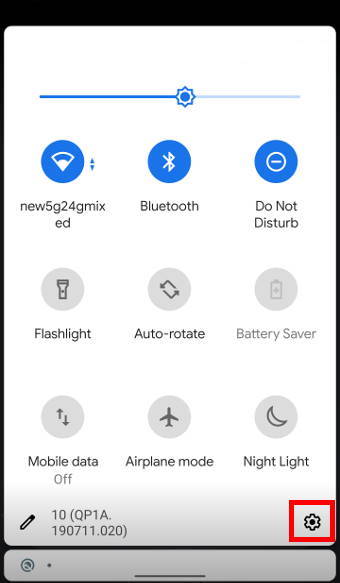
Firstly, you need to access Settings, as shown below, by tapping on the Settings icon in the Apps screen (App drawer), or Home screen.

Alternatively, you can access settings through the quick settings panel.
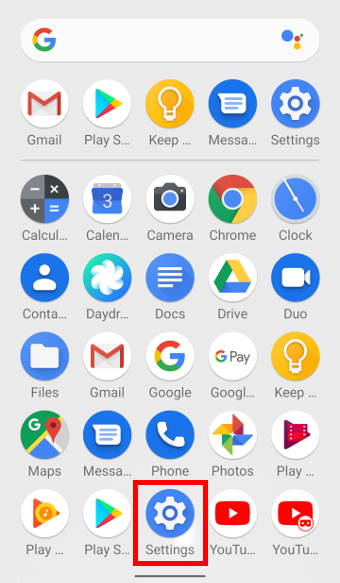
Accessing Settings through application Android 10 Quick Settings Panel

There are 2 ways to go to the location access settings page from the Settings page:

  • From the Location settings page
  • Through the Permission Manager

Method 1: Location settings page

In Settings, scroll down and tap on Location, as seen below, to access the location settings page.
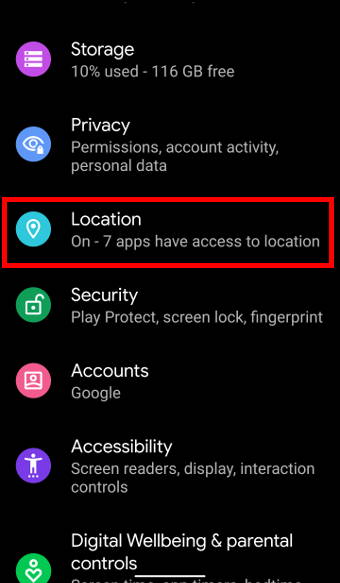
Android 10 Settings

In the Location settings page, tap on App permissions, as shown below.

This will bring you to the location permissions page.
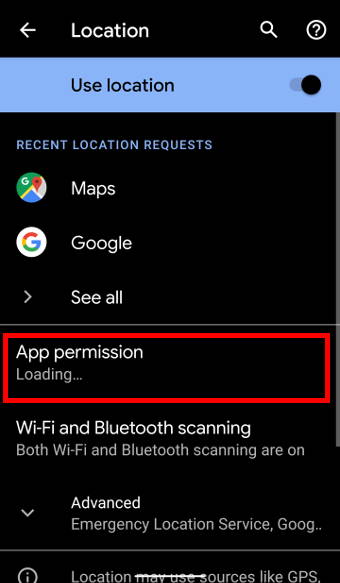
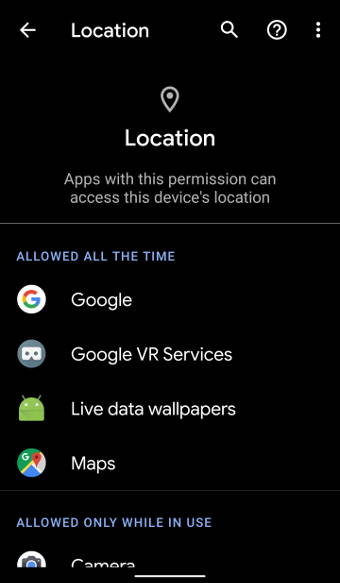
Android 10 Location settings Android 10 Location Access page

As shown above, in the location access control page, you can manage the location access (read on).

Method 2:  through Permission manager

In Settings, tap on Apps & notification.
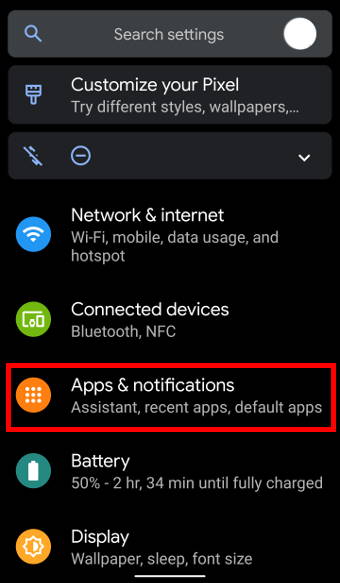
Android 10 Settings

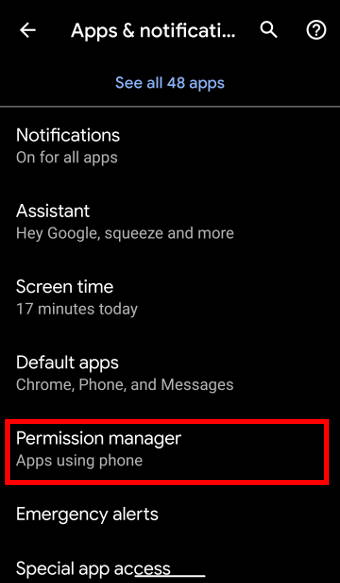
In the Apps & notification settings page, tap on Advanced to expand the list, as shown below.
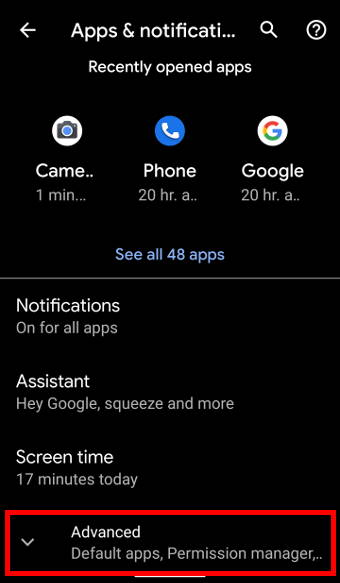
Android 10 Apps manager Android 10 Apps manager

As shown above, tap on the Permission Manager to access permission managers of Android 10.

In Permission Manager page, tap on Location, as shown below.

This will bring you to the same location access control page.
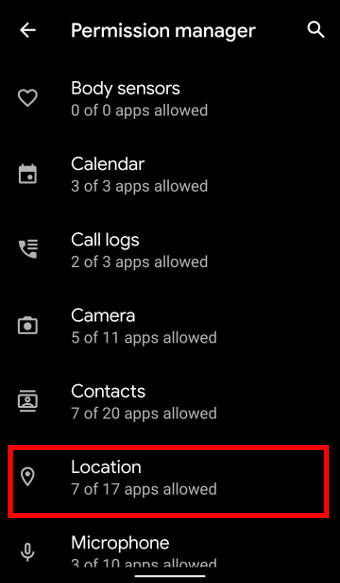
Android 10 Permission manager Android 10 Location Access page

How to use location access control?

The location access age allows users to see which apps can view the phone’s location as well as apps that may require permission to use the phone location.… Read the rest
Filed Under: Android 10 Guides Tagged With: Android 10, Android 10 new features, Android 9, Android Pie, app permission, location access, location access control, privacy, privacy control, quick setting panel, quick settings, settings

How to use Android 10 dark mode (dark theme)?

You can use the system-wide dark theme on Android 10 to save battery and protect your eyes

Last updated on: December 17, 2020, first published on: December 3, 2019 Leave a Comment

Android 10 dark modeAndroid 10 dark mode can be regarded as one of the best Android 10 new features.

The dark mode is not an unfamiliar feature for Android phones. It was introduced previously in Android Pie (Android 9).

This Android 10 guide explains the new features of the dark mode, shows you how to enable and use the dark theme in three different ways, and answers some questions you may have on this feature.

In addition, now in Android 11, scheduling has been added to Android Dark theme. With this new feature, devices can automatically switch between dark and light mode according to its settings, reducing the hassle for users to manually switch between the 2 modes. Check out this page to learn more about what’s new in Android 11 Dark theme.

What is new in Android 10 dark mode?

Similar to the dark theme in Android Pie (Android 9), dark mode in Android 10 brings about the following benefits:

  • Improves visibility for users with low vision or are sensitive to bright lights.
  • Less eyestrain when using phones in low light environments.
  • Longer battery life as there is decreased power usage.

However, in Android Pie (Android 9),  the dark mode was not applied system-wide.

For example, in Android Pie (Android 9), the Settings menu remains white even if dark mode is enabled.

Now in Android 10, it can be applied to both the Android system UI as well as supported applications. This means that once dark mode is enabled, the entire Android system UI, as well as supported applications, will automatically switch to the dark theme according to the application’s settings.

How to enable and use Android 10 dark mode?

There are 3 ways to enable dark mode in Android 10:

Method 1:  through Settings

The first method to enable dark mode in Android 10 phones is through the Settings menu.

Step 1: Open Settings

To access Settings, as shown below,  tap on the Settings icon in the Apps screen (App drawer), or Home screen,  or through the quick settings panel.

Accessing Settings through apps screen Android 10 Quick Settings Panel

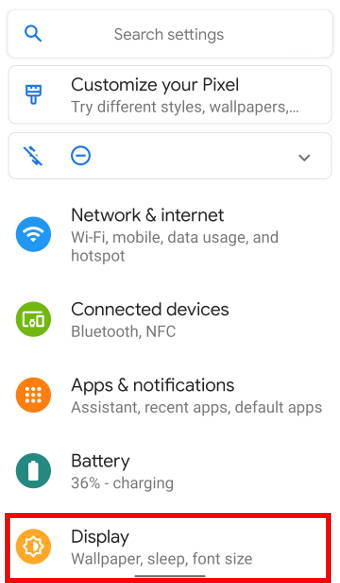
Step 2: Access Display settings

In Settings, scroll and tap on Display, as shown below.

Display Settings panel

Step 3: Enable the dark mode

In the Display Settings page,  you can find the option for the dark theme.

Tapping on it will turn on dark mode for the phone as well as all supported applications.

If the phone is already in the dark mode, tapping it will turn off dark mode.… Read the rest

Filed Under: Android 10 Guides Tagged With: Android 10, Android Pie, battery saver, dark mode, dark theme, quick setting panel, quick settings, settings

How to use the screenshot shortcut to take a screenshot on Android Pie?

Last updated on: January 30, 2019, first published on: January 30, 2019 Leave a Comment

How to use the screenshot shortcut to take a screenshot on Android Pie?Android Pie (Android 9) added a new screenshot shortcut so that it is very easy to take screenshots in smartphones with Android Pie.

This Android Pie guide explains where to find the screenshot shortcut in Android Pie and how to use it to take a screenshot in Android Pie.

Why you may need the screenshot shortcut?

In all Android phones, the default method of taking a screenshot is pressing and holding the power button and volume down button simultaneously.

Using this button combination to take screenshots works on all Android phones and tablets. regardless of the version of Android.  Even on Amazon Fire tablets, you can take a screenshot with the power button and volume down button although Amazon tried very hard to de-Google in the Fire OS (which is based on Android).

The method is simple and easy if you “master” it.

The tricky part is that you need to press and hold the two buttons “simultaneously“. It means

  • If you hold the power button too early, you get the power menu (power button options).
  • If you hold the volume down button too early, you get the volume settings.

For many users who take screenshots only occasionally,  it is hard to control the timing.

So, a shortcut for taking screenshots is one of the most popular features in some Android phones.

Now, Google finally introduced the screenshot shortcut to take a screenshot on Android Pie.

Both new users and experienced users will find it very useful. Even your grandma can easily take a screenshot with the screenshot shortcut.

Where is the screenshot shortcut in Android Pie?

After hearing about this new Android Pie feature, Some Android Pie users tried to find the screenshot shortcut in the quick settings.

Of course, they cannot find it.

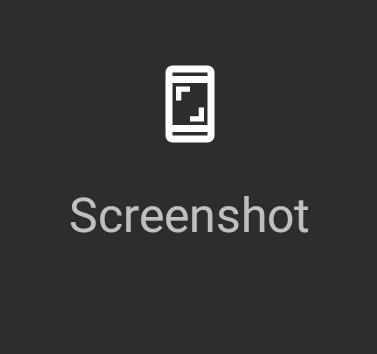
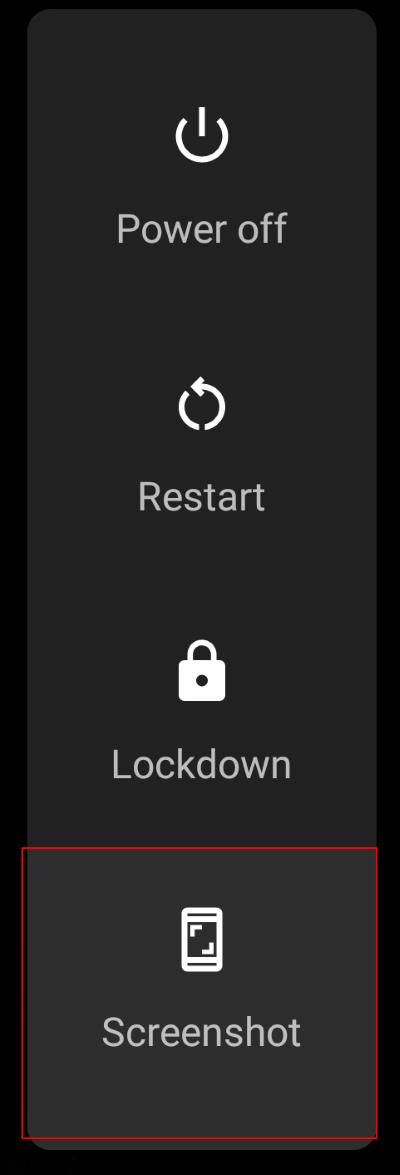
The screenshot shortcut is in power menu (aka power button options).

You can hold the power button for about 2 seconds to get the power menu /power button options as shown below.

Where is the screenshot shortcut in Android Pie

By default, the shortcut to screenshot is enabled in the power button options. Stock Android does not offer a standard method to hide/unhide it.

However, some Android manufactures may customize this feature and let you enable or disable the button.

How to use the screenshot shortcut to take a screenshot on Android Pie?

To take a screenshot, you just need to call out the power button options, then tap Screenshot as shown above to take a screenshot for the screen (without the power button options).… Read the rest

Filed Under: Android Oreo Guides Tagged With: Android Pie, Fire OS, power button, power menu, quick settings, screenshot, screenshot shortcut, shortcut, volume down button

How to play Android Oreo Easter egg game?

Last updated on: August 3, 2025, first published on: January 25, 2018 19 Comments

Since Android Gingerbread, Google has always hidden an Easter egg in each major version of Android.

In Android Lollipop and Marshmallow, the Easter egg is the flappy bird-like game: dodging lollipops or flying bugdroid (to dodge Marshmallows).

The Easter egg in Android Nougat is even more interesting. The cat-catching game (Android Neko) is somewhat addictive for some users.

Android Oreo is not an exception. It also comes with an Easter egg.

You may also try the Android 15 Easter Egg game: Landroid.

What is Android Oreo Easter Egg?

Android Oreo’s Easter Egg features an octopus (because it is Android O).

It is a simple game: you can watch the octopus moving in the sea. Of course, you can drag it to move faster and change its path.

How to access the Android Oreo Easter egg game?

Google did not change the way to access the Easter egg in Android Oreo.

If you are new to the Android Easter egg, you may follow these steps to access the Android Oreo Easter egg game.

Step 1: Access phone settings

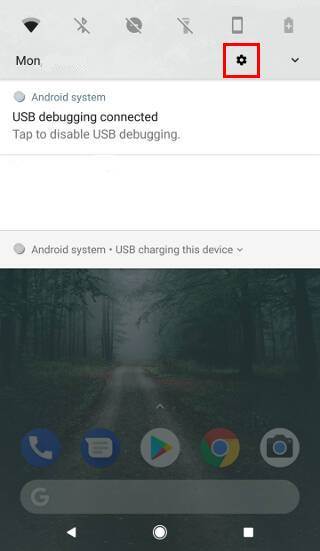
You can access phone settings via the quick settings panel or the settings app in the Home screen or Apps screen.

For example, as shown below, you can tap the settings icon (gear) in the quick settings panel to access phone settings.

Oreo easter game

Step 2: Access Android version

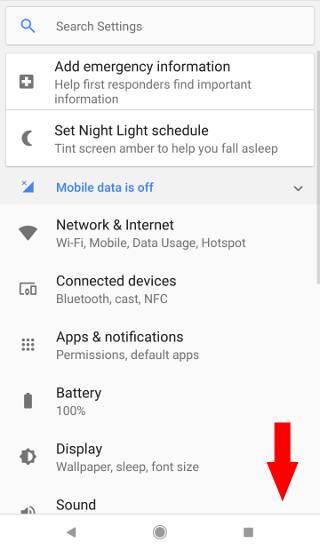
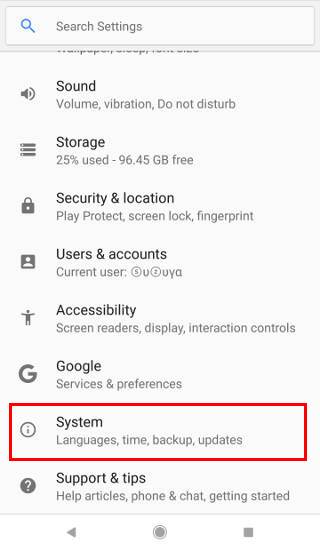
In settings, scroll all the way down until you find system (or about phone in some Android phones).

Then as shown below, tap on System.

Oreo easter game Oreo easter game

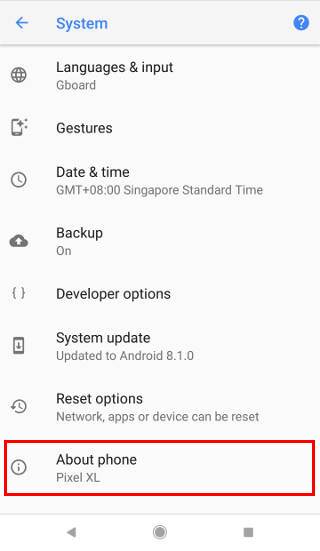
In System page, tap on About phone.

Oreo easter game

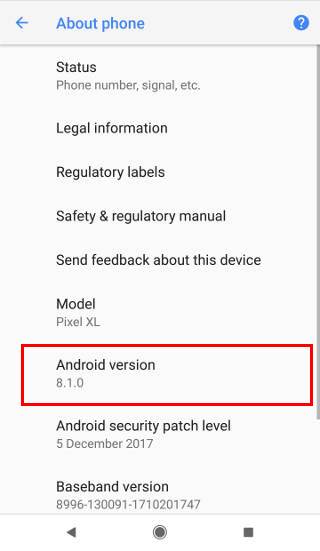
In the About phone page, you can find the Android version.

For example, as shown below, this Pixel XL is running Android 8.1.0.

Please note, some Android vendors may arrange the Android version in other locations.

Oreo easter game

Step 3: unhide Android Oreo Easter egg

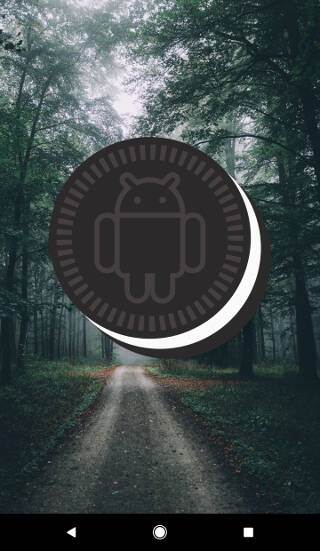
You can unhide the Android Oreo Easter egg by tapping rapidly on Android version for more than 5 times.

An Android Oreo icon should appear as shown below.


Oreo easter game

Step 4: Play Android Oreo Easter egg game

Tap on the Android Oreo icon rapidly a few times and hold it to launch the game.

There are also a few other ways to launch the game as well.

The Android Oreo Easter egg- an octopus,  would appear.

You can drag the octopus by its head around the screen to move it.

Oreo easter game

To exit the game, simply press the back icon on the navigation bar.… Read the rest

Filed Under: Android Oreo Guides Tagged With: Android Easter egg, Android Oreo, Android version, Landroid, Neko Cat game, quick settings

How to use and manage notification channels in Android Oreo?

Last updated on: December 26, 2020, first published on: January 20, 2018 2 Comments

Notification channels (notification categories) in Android Oreo give you granular control of notifications.

You can manage individual channels of notifications from all apps to meet your needs.  You can use notification categories (channels) together with notification dots and notification snooze to get total control of notifications in your Android Oreo phones.

This Android Oreo guide explains what notification channels are, 3 ways to access notification categories and how to manage notification channels in Android Oreo phones.

In addition to notification management, Android 11 has introduced notification history; a feature that allows users to track and access dismissed notifications on their devices. Check out this post to learn more about this new feature.

What are notification channels?

When an app pushes notifications, you may want to only allow a certain type of notifications, for example, important notifications related to certain activities, to appear in the notification panel.

Prior to Android Oreo 8.0, you can enable or disable notifications for individual apps.  You can also silence notification for individual apps.

But you cannot selectively disable or enable some notifications of an app.

In Android Ore0, developers can group notifications of their apps into different notification channels (aka notification categories). You, as a user, can disable or enable individual notification channel (notification category) based on your preferences. For example, you can allow notifications from a specific notification channel to bypass do not disturb.

In a nutshell, notification channels offer granular control of notifications of individual apps. You can manage the notifications of each channel as well as of individual app.

Notification channels are enabled by individual app developers for their apps.  Apps developed for older versions of Android (API level less than 27) will not have notification channels even if your phone was updated to Android Oreo.

How to access notification channels in Android Oreo?

There are at least 3 ways to access the notification channels for individual apps:

  • via Quick Settings panel;
  • Settings app;
  • in the notifications panel.

Accessing notification channel through the Quick Settings panel or settings app

Step 1: Access the Settings menu

You can tap the settings app icon in the Home screen or Apps screen to enter phone settings.

Alternatively, you can open the quick settings panel by pulling the status bar downwards (swiping down from the status bar).

Then in the quick settings panel, tap the settings icon as shown below to access phone settings.… Read the rest

Filed Under: Android Oreo Guides Tagged With: Android Oreo, Android Oreo 8.0, Android Oreo 8.1, Notification Channel, Notification Dots, notification panel, Notification Snooze, quick settings

What’s new in Android Oreo 8.1: Android Oreo 8.1 vs Android Oreo 8.0

New features and enhancements introduced in Android Oreo 8.1

Last updated on: January 6, 2018, first published on: January 6, 2018 6 Comments

Android Oreo 8.1 vs Android Oreo 8.0There are two versions of Android Oreo: Android Oreo 8.1 vs Android Oreo 8.0.

Google released Android Ore0 8.1 in December 5, 2017,  in less than 4 months after the release of Android Oreo (8.0).

There are a couple of new features and enhancements (as well as bug fixes) in Android Oreo 8.1, compared to Android Oreo 8.0.

This Android Oreo guide will show you the new features in Android Oreo 8.1. For new features in Android Oreo 8.0, please check this post.

Android Ore0 8.1 new features: #1. Neural Networks API

With Android Oreo 8.1 update, Android API level climbs to 27 with considerable changes for developers, especially in machine learning.

Neural network processing, which provided a much faster computation than with general-use CPU alone, is one of the most prominent features in Android Ore0 8.1.

Neural Networks API provides a base layer of functionality for higher-level machine learning frameworks. It can be called by machine learning libraries, frameworks, or relevant tools so that developers can train their models off-device and deploy them on Android devices.

With Android Neural Networks API, apps can run computationally intensive operations on mobile phones and to support on-device inferencing including classifying images, predicting user’s behaviour and selecting appropriate responses to search query.

Because inferencing is on-device, all your data are kept on the phone. So, it is unnecessary to worry about the privacy issues.

Android Ore0 8.1 new features: #2. Android Oreo (Go edition)

Android Go is a smaller and lightweight version of Android targeted for more entry-level smartphones.  It will complement Android One, which targets for middle range devices with pure Android experiences.

Android Oreo (Go edition) is the first release of Android Go. Some Android Go devices will be available in the market in 2018.

Compared to stock Android, Android Go is optimized for smartphones with lower specs:

  • Memory optimizations: memory usage is improved to ensure that apps can still run efficiently on devices with 1GB or less RAM.
  • Optimised Google Apps:  Google apps are redesigned for lighter updates and optimised to ensure they use less memory, storage space and mobile data. This allows them to create more space and at the same time improving the phone’s performance.
  • Google Play: All apps will still be available on devices running on Android Go.  But Google Play in Android Go would highlight apps that are specifically optimised for Android Go.

We will review some Android Go phones once they are available.… Read the rest

Filed Under: Android Oreo Guides Tagged With: Android Go, Android Oreo, Android Oreo 8.0, Android Oreo 8.1, Bluetooth, easter egg, navigation bar, Neural Networks API, power menu, quick settings, visual core

  • « Go to Previous Page
  • Page 1
  • Page 2

Primary Sidebar

Search the site

RSS Galaxy S25 Guides

  • All New Features of One UI 8 (Android 16) Update for Galaxy S25, S24, S23, and S22
  • One UI 8 Update Highlights for Galaxy S25, S24, S23, and S22
  • How to manage camera modes on Galaxy S25 (and Galaxy S24, S23, S22, and S21 with One UI 7 update)?
  • How to Use Galaxy S25 Camera App?
  • A Definite Guide to Galaxy S25 Flipsuit Case
  • How to Access and Customize Now Brief on Galaxy S25?
  • Meaning of Galaxy S25 Status Icons and Notification Icons
  • Layout of Galaxy S25, S25+, and S25 Ultra

RSS Galaxy S24 Guides

  • The definitive guide to One UI 7 (Android 15) update for Galaxy S24, S23, S22, and S21
  • The Definitive Guide to Galaxy AI on Galaxy S24, S23, S22, Fold 6, Fold 5, Flip 6, and Flip 5
  • Use the Light Performance Profile to Extend Battery Life and Reduce Heat on Galaxy S24, S23, S22, and S21 (all Samsung Galaxy Phones with Android 14/One UI 6.0)
  • How to adjust lock screen timeout on Galaxy S24, S23, S22, and other Galaxy devices?
  • How to use Circle to Search on Galaxy S24?

RSS Galaxy S23 Guides

  • Explanation of all One UI 6.1 features for Galaxy S23, S23+, S23 Ultra, and other Galaxy devices
  • How to use One-Tap Editing in the Android 14 (One UI 6) update?
  • How to enable and use Auto Scan to scan documents automatically on Galaxy S23, S22, and S21?
  • New camera features in One UI 6 (Android 14) update for Galaxy S23, S22, and S21

RSS Galaxy S22 Guides

  • A Complete Guide for Android 14 (One UI 6) Update on Samsung Galaxy Devices
  • How to touch and hold to customize Lock Screen on Galaxy S22, S21, and S20 with the Android 13 update?
  • How to use Maintenance Mode on Galaxy S23, S22, S21, and S20 with Android 13 (One UI 5)?

RSS Samsung Galaxy S21 Guides

  • Top 12 new features in Android 12 update for Galaxy S21, S20 and S10
  • Android 12 update vs One UI 4.0 vs One UI 4.1: update Galaxy S21, S20 and S10 to Android 12
  • How to set and resize photo size on Samsung Galaxy S21, S20, S10, and S9 without using any third-party apps?

RSS Galaxy S20 Guides

  • The End of the Road: No Android 14 Update for the Galaxy S20
  • How to Use Enhanced Processing on Galaxy S20 with Android 11 update?
  • How to access, use, and customise widgets on Galaxy S20 lock screen and AOD screen with Android 11 update for Galaxy S20?

RSS Galaxy S10 Guides

  • End of security update for Galaxy S10, S10+ and S10e
  • Top 10 new features in Android 10 update for Galaxy S10
  • Top 5 new features added in Galaxy S10 September Update

RSS Galaxy S9 Guides

  • How to use Bixby quick commands on Galaxy S9, S9+, S8, S8+, Note 8, and Note 9 with the Android Pie update?
  • How to remap Bixby button on Galaxy S9 and S9+ after updating to Android Pie?
  • How to use the updated camera app in Android Pie update for Galaxy S9 and S9 Plus?

RSS Galaxy S8 Guides

  • How to use the new features in Android Pie update for Galaxy S8 and S8+?
  • How to use app shortcuts in Galaxy S8 Home screen in Android Oreo update for Galaxy S8 and S8+?
  • Use notification dots/notification number badge in Galaxy S8 Android Oreo update

RSS Galaxy S7 Guides

  • How to use Galaxy S7 multi window new features in Android Nougat udpate for Galaxy S7 and Galaxy S7 edge?
  • How to customize Galaxy S7 quick setting buttons after Android Nougat update?
  • Galaxy S7 performance mode in Android Nougat update for Galaxy S7 and Galaxy S7 edge

RSS Galaxy Note Guides

  • Top 11 disappointments of Galaxy Note 20 and Galaxy Note 20 Ultra
  • How to use the Dynamic Lock screen on Galaxy Note 10?
  • Galaxy Note 10 LED View Cover Guide and Review
  • Install S Note app and Extension pack on Galaxy Note 10
  • How to Use Galaxy Note 10 Camera App?
  • Galaxy Note 10 SIM Card Guide

RSS Google Home Guides

  • How to Use Quick Gestures on Nest Hub 2nd Gen and Nest Hub Max?
  • Understand the layout of Nest Hub (including Nest Hub 2nd Gen, Google Home Hub)
  • How to control Nest Audio?
  • Nest Audio Guides
  • Layout of Google Nest Mini (Google Home Mini 2nd Gen)

RSS Moto G Guides

  • Stylus features on Moto G Stylus (all models)
  • What’s new in Moto G 2024? Moto G 5G 2024 vs Moto G Power 2024 vs Moto G Play 2024
  • Understand Moto G Model Names

RSS Samsung Galaxy S5 Guide

  • How to enter Galaxy S5 recovery mode?
  • How to set Galaxy S5 photo size and video size?
  • How to use Galaxy S5 camera voice control?

RSS Moto X Owners Community

  • Welcome on board, Motorola Razr!
  • Official Moto X4 User manual (User guide for Moto X 4th Gen , Moto X 2017)
  • What’s new in Android Marshmallow update for Moto X (Moto X 2015, Moto X 2014, Moto X Style and Moto X Pure edition)?

RSS Moto E Guides

  • How to use Moto E6 camera?
  • How to use SIM cards on Moto E6, E6 Plus, E6 Play, and E6s 2020?
  • Official user manual for Moto E6, Moto E6 Plus, Moto E6 Play, and Moto E6s
  • Moto E6 vs Moto E6 Plus vs Moto E6 Play vs Moto E6s: what are the major differences?

RSS Galaxy S4 Guides

  • Samsung Galaxy S4 Manual for Verizon
  • Galaxy S4 User Manual and Handbook in English

RSS Galaxy S6 Guide

  • Android Nougat Update Guide for Galaxy S6, Galaxy S6 edge and Galaxy S6 edge+
  • Official Galaxy S6 user manual with Android Nougat update
  • Top 10 new features in Android Marshmallow update for Galaxy S6, Galaxy S6 edge and S6 edge+

RSS Guides for Fire Tablet

  • Fire Tablet Buyer’s Guide 2025
  • How to use Writing Assist on Fire Tablet?
  • How to use Wallpaper Creator on your Fire tablet?
  • How to Use Webpage Summaries on Your Fire Tablet?
  • What’s new in Fire HD 8 2024 (12th Gen)?

Footer

RSS Drive In Singapore

  • Singapore ERP (Electronic Road Pricing): 6 Facts You Need to Know
  • Car Insurance in Singapore Explained
  • Top 5 rules of driving in Singapore safely and legally during COVID-19 Circuit Breaker period
  • Understand COE Price by 10 Simple Questions
  • How to convert a foreign driving license to a Singapore driving license?
  • How to get a Touch ‘n Go card as a Singapore driver?
  • What is covered in the car warranty in Singapore? What is not?
  • What is the Singapore Road Speed Limit?
  • How to register, collect and use Malaysia Vehicle Entry Permit (VEP)?
  • Why are cars in Singapore so expensive?

RSS All About Chromecast

  • How to enable developer options in Chromecast with Google TV and Google TV Streamer?
  • Meaning of LED light on voice remote for Chromecast with Google TV and Google TV Streamer
  • What’s new in Chromecast 2018 (3rd gen of Chromecast)?
  • How to use VLC media player on PC to stream music and video to Chromecast and Chromecast Audio?
  • How to use Chromecast Ultra to stream 4K content?
  • How to disable Google Home and Chromecast casting notification?
  • How to launch Videostream (and other Chrome apps as well)?
  • A Guide to Chromecast Offers
  • Chromecast guest mode guide
  • Screen mirroring with Chromecast

RSS Headphone Guides

  • Surviving the 9-to-5: AirPods Pro 3 for Commuting and Open Offices
  • AirPods Pro 3 Heart Rate Monitor Accuracy: Tested Against a Chest Strap
  • The Ultimate Student Setup: Maximizing AirPods Pro 3 for Focus and Study
  • Ditch the Watch: How to Track Workouts Using Only Your AirPods Pro 3
  • Beyond Audio: The Hidden Features of the AirPods Pro 3
  • Can You Take a Meeting in a Coffee Shop? Sony WF-1000XM6 Microphone & AI Test (Call Quality)
  • Are the WF-1000XM6 High-Fidelity? Testing LDAC & 32-Bit Processing
  • Sony WF-1000XM6 vs. Bose QC Ultra Earbuds Gen 2: The Battle for Silence
  • The Evolution — What’s New in Galaxy Buds 4 and Galaxy Buds 4 Pro?
  • AirPods Pro 3 vs. Audiophile Earbuds: Does Apple Finally Compete?

© 2015–2026 · GadgetGuideOnline.com is a online community for Gadget Owners! · Hosted by PTRHosting
Android Guide, Android tips, tricks and hacks. Everything you need know about Android. These guides will teach you how to use your Android phones and other Android gadgets.
Powered by Genesis framework for WordPress
Disclaimer: Android is a trademark of Google. This website is NOT affiliated with Google in any way. All the information provided on this website is provided on an "as is" and "as available" basis and you agree that you use such information entirely at your own risk.

Add Android Guides to your Homescreen!

Add
We use cookies to give you the best online experience. By using our website you agree to our use of cookies in accordance with our cookie policy.